Fragmented coordination
Disconnected tools, spreadsheets and manual handoffs for every change.
 Sarim Naeem
A role-based transportation platform for managing employees, shifts, routes, vehicles, drivers and daily trips in one connected experience.
Managing transportation for a handful of employees is straightforward. At enterprise scale, it's an entirely different challenge.
Built for enterprise organizations in Saudi Arabia, Rehal helps companies coordinate workforce transportation at scale — from assigning employees to vehicles and routes, to tracking daily operations — replacing fragmented manual processes with a centralized system designed for operational efficiency.
This project wasn't about designing another enterprise dashboard. It was about understanding how transportation teams actually work, and turning operational complexity into something intuitive.
Transportation teams were relying on disconnected tools, spreadsheets and manual coordination. Every change — assigning a driver, updating a route, accommodating a last-minute request — required multiple people and too many manual steps. As organizations grew, so did the complexity: managers needed visibility into thousands of daily trips, while administrators had to maintain vehicles, routes, drivers and company data without slowing operations.
The challenge wasn't adding more features. It was reducing complexity without reducing capability.
Disconnected tools, spreadsheets and manual handoffs for every change.
Teams needed a faster view of pickups, trips, vehicles and exceptions.
More companies, routes and vehicles meant more cognitive load for users.
I led the process from discovery through developer handoff.
Working closely with stakeholders, I translated real transportation and operational workflows into a scalable digital experience.
A transportation manager and a system administrator perform entirely different jobs.
One cares about today's operations. The other manages the entire transportation ecosystem. Trying to satisfy both through the same interface would only increase cognitive load — so I designed role-specific experiences instead of one feature-heavy platform.
Their dashboard answers these questions immediately, without forcing them through multiple reports or navigation layers.
Administrators manage the system behind the scenes — companies, vehicles, drivers, routes and the health of the transportation network.
Turn one complex dependency chain into six clear decisions.
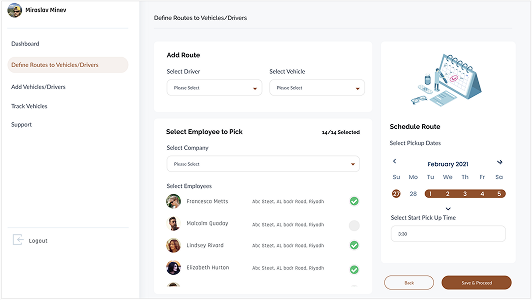
An employee belongs to a company, works a shift, and needs a pickup. The pickup is assigned to a route, which requires an available vehicle, which requires an available driver — a small change to one element can affect the entire journey.
Rather than exposing this complexity all at once, I designed progressive workflows that guide users through each decision step by step. People only see what they need at that moment, keeping scheduling structured and predictable.
Transportation managers don't begin their day by opening reports.
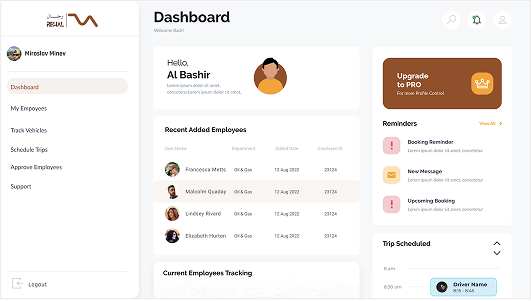
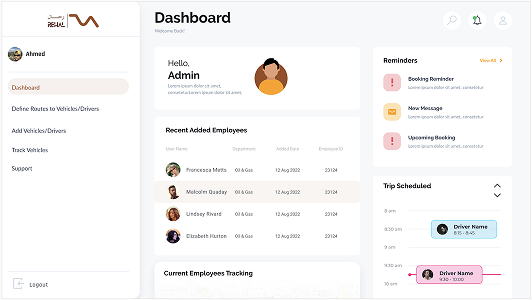
That question shaped the dashboard. Instead of filling the interface with charts and navigation, the first screen prioritizes operational awareness over everything else.
The result is a dashboard that supports decision-making rather than simply displaying data.
Managers get direct access to employees, schedules, active transport and approvals — without navigating through administrative setup.
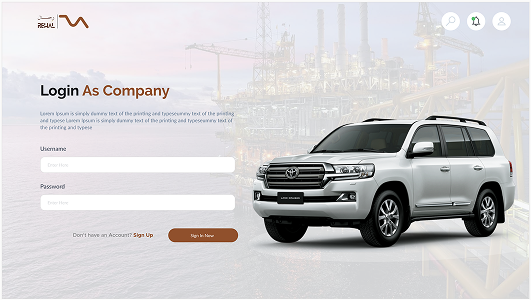
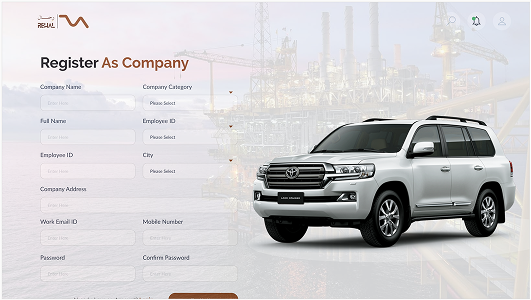
Recent employees, reminders, scheduled trips and current activity are visible immediately.
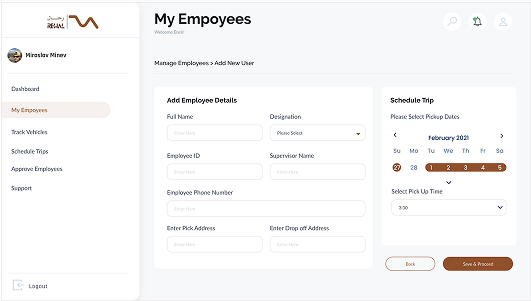
Design choice — operational awareness before reporting.Managers can review employees, add new records and move into scheduling without leaving the workflow.
Design choice — fewer navigation jumps between related tasks.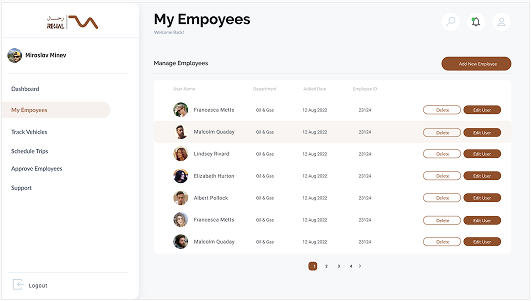
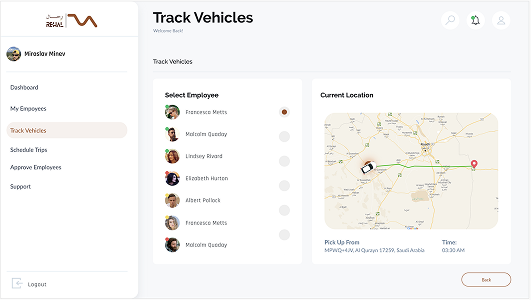
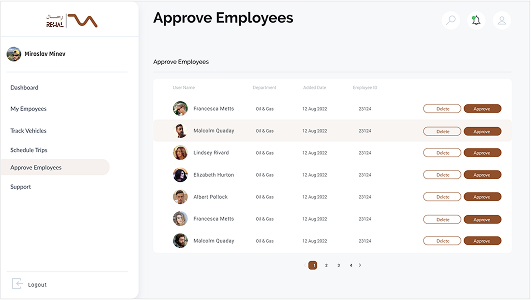
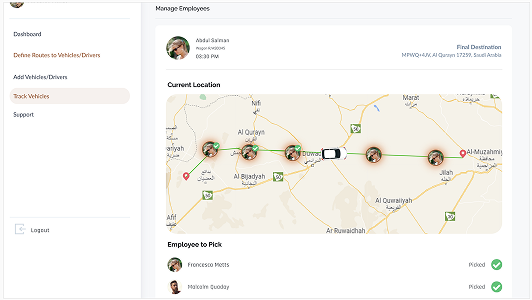
Administrators manage the system behind the scenes: routes, vehicles, drivers, schedules, assignments and live network activity.
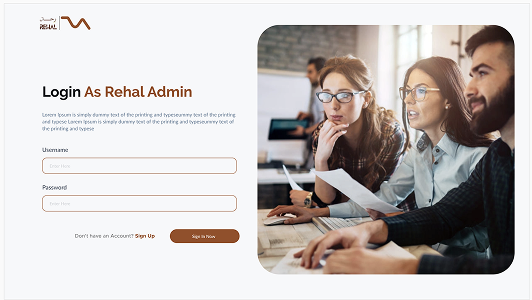
Admins can define routes and move directly into route assignments without losing context.
Design choice — separate list management from assignment detail.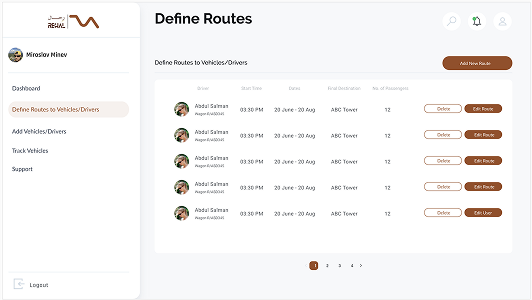
The form groups operational dependencies into one structured task instead of spreading them across screens.
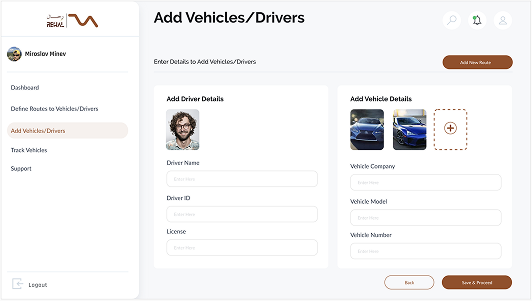
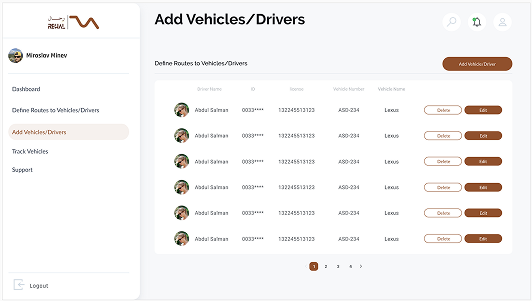
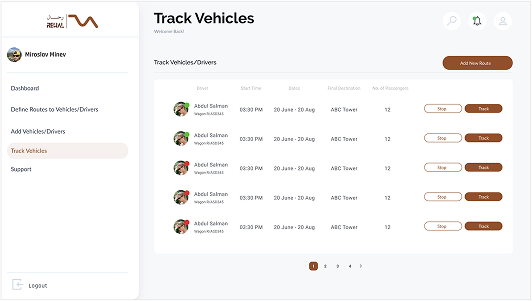
Location, assigned employee and route context sit together so admins can understand what is happening without opening multiple records.
Enterprise products get cluttered because every department requests new functionality.
Throughout the project, I challenged each addition with one question: does this help users complete today's work more efficiently? If not, it didn't belong on the primary experience.
Prioritize the information needed for the current task.
Break connected decisions into progressive steps.
Advanced controls remain available without dominating daily work.
By organizing the experience around user responsibilities instead of system features, Rehal became easier to navigate, easier to scale, and better aligned with how transportation teams actually work. While the platform handled thousands of operational variables behind the scenes, users saw only what mattered, at the moment they needed it.
Employees, schedules, routes, vehicles, drivers and trips are connected.
Teams can understand what is happening now without digging through reports.
More capability can be added without turning the main experience into a feature wall.
Complex systems don't need complicated interfaces. They need thoughtful structure.
Rehal reinforced something I continue to apply across every product I design. It wasn't memorable because of the number of dashboards or features it contained — it was memorable because of how information architecture and role-based experience simplified an operationally complex environment.